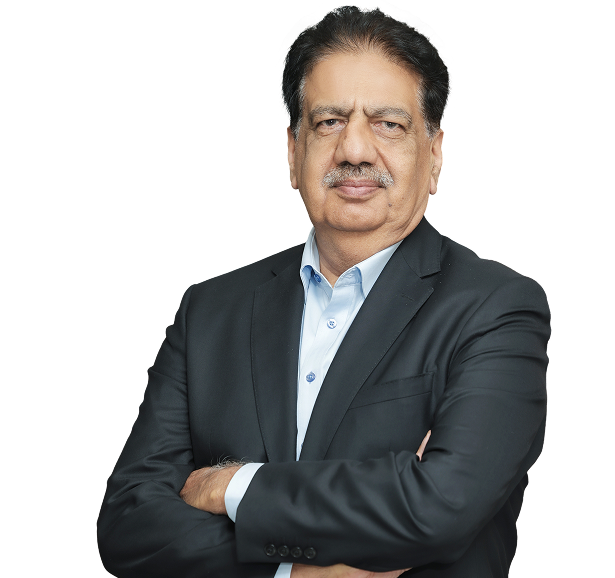
Nayar traveled around the world, bluntly conveying the truth about HCL's situation to employees and getting them to turn their eyes away from the past and towards a better future. What did HCLT do to effect such a transformation? As Vineet Nayar describes in this refreshing book - EMPLOYEES FIRST, CUSTOMER SECOND: Turning Conventional Management Upside Down - HCLT's success resulted from putting employees first, especially those working in the 'value zone' where company and customers interact. To do so, they did not institute any employee satisfaction programs, undertake any massive restructurings, or pursue any major technology initiatives. Instead, they employed a number of relatively simple catalysts that produced big (and often unexpected) results and proceeded through four phases:
Power to the Employees
Employees First,
Customers Second
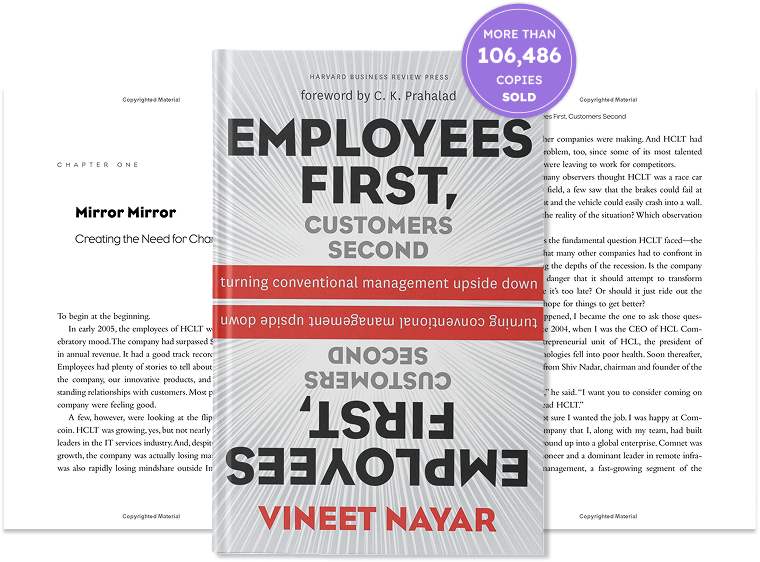
Turning Conventional ManagementWisdom Upside Down...
A passionate and disruptive thinker, Vineet has introduced the world to a unique brand of energetic and inspirational leadership. Convinced that leadership lies at the bottom of the corporate hierarchy, his 'Employees First, Customer Second' philosophy has won many awards and received recognition from many eminent institutions across the world.
Nayar continues to share his knowledge and build his thought leadership through numerous articles, speaking engagements, and intellectual partnerships. He remains a restless and relentless innovator in both his professional and social capacities, one who believes that even the most successful management approaches must constantly be evaluated, refined, adapted and rethought, and, when necessary, scrapped altogether. You can explore more of his management philosophies on his personal scrapbook and through his blog published on the Harvard Business Review website.
When Vineet Nayar took the helm of HCL Technologies in 2005, the company's legacy of success was threatened by global shifts in the IT services market that left HCLT struggling to keep up with its bigger rivals. Five years later, the company had become one of the fastest-growing IT services partners on the planet, world-renowned for its radical management practices. In fact, its bold management experiments enabled HCL to enjoy continued rapid growth through the economic recession.
A culture of trust was created by opening the financial books, sharing information that would make other companies cringe, and enabling employees and managers (including the CEO) to ask questions of each other.
The company redefined processes to make the enabling functions and company management accountable to employees – which resulted in improvement in both their effectiveness and passion for work.
HCL Technologies transferred the responsibility for change from the office of the CEO to the employees, creating a company that was, in many ways, self-run and self-governing. Employees now ask and answer as many questions as the CEO, increasing the speed and quality of innovation and decision-making in the value zone.
Nayar admits that he didn't have a clue where he was headed when he started on this journey, and he candidly describes leadership missteps he made along the way. These concepts only became clear to him after the transformation, but he argues that many of these ideas and practices – which Fortune magazine has characterized as "the world's most modern management" – can be successfully adopted by any company in any industry, anywhere in the world, with similar results.
Read What Others Have To SayAbout The Book
Awards & Recognitions

Forbes 'Heroes of Philanthropy' List 2016 for Innovation led large-scale social change

'Global Thinker 2016' by Foreign Policy for unplugging technology, so kids can learn
'Employees First, Customer Second' has sold over 100,000 copies worldwide
Fortune has described him as having led the "World's most modern management"
Fortune chose him in their first 'Executive Dream Team' 2012

Included in Thinkers50 List 2011-12
Juror of Harvard Business Review's prestigious McKinsey Prize, two years in a row
Under his stewardship, Business week called out HCLT amongst "one of the world's most influential companies"

Felicitated with France's prestigious Oliver Lecerf Prize

Conferred with Manpower HEC Prize

Conferred with 'Business HR Champion Award' at the European HCM Excellence Awards, 2011

Founding Member of Brookings India

Adjudged as the 'CEO of the Year' in Bloomberg UTVi CXO Awards, 2011
The Employees First,Customers Second Transformation Journey
Be a part of the movement
What Part of Being Human Will YouNever Give Up?
Humans First, Machines Second is a conversation about winning in the age of AI without losing what makes us human. This is where it begins. Find your city, take your seat, and bring your answer to the room.